


|
Aspiration |
Taking a sample of gastric (stomach) contents for pH testing via a nasogastric tube |
|
Gravity Bolus Feeding |
A method of giving a pre-determined volume of feed or water via an open syringe in smaller volumes and at regular intervals. The feed should take around 15-30minutes to administer, the time depends on the feed type, volume being given and the individual child / young person |
|
Pump Feeding - Bolus |
A method of giving a pre-determined smaller volume of feed at a controlled rate through an enteral feeding pump. The period of feeding will be planned for each individual child / young person |
|
Pump Feeding -Continuous |
A method of giving a pre-determined volume of feed at a controlled rate pump over a longer period of time. The period of feeding will be planned for each individual child / young person |
|
High Risk Abdomen in PICU |
Patients who undergo complex surgery, for example cardiac bypass, are the risk of ischemic gut and may need the high risk abdomen guideline for introduction of enteral feeding |
|
pH indicator strip |
Strip that measures the amount of acid in the gastric aspirate |
|
NEX measurement |
Measurement of the length of tube to be inserted (Nose-Ear-Xiphisternum) |
Paediatric nasogastric feeding guideline for healthcare professionals (1189)

What's new / Latest updates
This guideline replaces the previous WoSPGHaN guideline. It aligns to current NHSGGC adult NG guidance and care plan where possible and takes into consideration actions and learning points from recent SAER and Datix.
Objectives
The purpose of this document is to provide guidance to all health care professionals working in acute paediatrics (excluding Neonates) within NHS Greater Glasgow and Clyde (NHSGGC) to provide safe care and delivery of enteral nutrition (EN) through a nasogastric (NG) tube in children and young people.
Adopting a consistent approach will promote a seamless service for children and young people and aims to reduce the potential risks associated with nasogastric tube feeding.
AIM
- To provide information on nasogastric tube feeding that reflects current thinking and evidence based practice to healthcare professionals
- To outline best practice for procedures relating to nasogastric tube feeding
- To promote a consistent approach to nasogastric tube feeding for children/young people
- To promote safe delivery and reduce the potential risks nasogastric tube feeding in children/young people
Scope
This guidance applies to all health care practitioners that care for children and young people with a nasogastric tube within NHSGCC paediatrics. This includes healthcare support workers, registered nurses, medical staff and associated students in undergraduate programmes on placement, bank and agency staff.
Glossary
Introduction
Nasogastric tube feeding is a way to deliver nutrition, hydration and medication into the Gastrointestinal (GI) tract through an artificial flexible tube that is inserted into the stomach through the nasal passage. It is the most suitable route for patients requiring short term enteral feeding support or for patients awaiting procedures to provide longer term access such as a gastrostomy tube. This method of feeding is only necessary or desirable when a patient’s nutritional needs cannot be met orally for various reasons.
This may include, but not limited to;
- Unable to feed by mouth (orally)
- The need for supplemental nutrition or hydration
- Distress during feeding or oral aversion
- Recurrent aspiration
- Decompression and drainage of stomach contents
- Chronic illness
- Acute illness
- Unconscious patient
Indications
Nasogastric feeding can provide effective support in both the short and long terms for patients who cannot meet their nutritional requirement orally and where their gut is still functional. The associated risks and benefits must be assessed and discussed with the patient, their parents/ carers before commencing nasogastric feeding.
- Confirmation and documented by medical staff that this is an appropriate treatment plan
- Is it appropriate to pass a nasogastric tube and commence feeding at this time and is the required equipment available?
- Is there sufficient knowledge or expertise available to test for safe placement of the nasogastric tube?
- Consider referral to Dietetics via Trakcare for assessment, continuing recommendations and monitoring
Roles & responsibilities
All healthcare support workers involved in the insertion, testing and administration of nasogastric feeding should be appropriately trained and supervised until considered competent. A practitioner can be described as competent if they have had the necessary training, clinical experience, skills and knowledge to undertake the task safely and without direct supervision.
The table below outlines the specific roles and responsibilities for healthcare practitioners
|
Senior Healthcare Support Worker Responsibilities |
Registered Nurse Responsibilities |
NB. Healthcare support workers should not be involved in the administration of medication |
|
Consent
Consent is required before healthcare practitioners undertake any care for a patient. Informed consent must be obtained before any procedure taking place, this involves a clear explanation of the risks and benefits. This may be informal (verbal) or formal (written) for more complex procedures. Children and young people under 16 years old have the legal capacity to consent, or refuse treatment on their own behalf, if they are deemed capable of understanding the nature and possible consequences of treatment. A parent or legal guardian may consent to medical treatment if the child lacks decision-making capacity.
In emergency situation, common law and duty of care reasoning allows healthcare practitioners to use clinical judgment as to whether the risks of delaying a procedure outweighs the need for formal consent. The healthcare practitioner must ensure that it is necessary, reasonable and proportionate.
Description of nasogastric tubes in paediatrics
Short Term
These tubes are typically made from Polyvinylchloride (PVC) and are fully radio-opaque. They can remain in place for between 7-10 days, depending on manufacturer’s recommendations. They should be replaced if required for a longer duration as can become brittle over time.
Long Term
These tubes are made from Polyurethane (PUR), fully radio-opaque and typically have a guidewire to aid the passing of the tube. They can remain in place for 90 days or as long as required, depending on manufacturer’s recommendations provided the tube remains intact with no complications. These tubes remain soft and flexible throughout use.
All nasogastric tubes (short and long term) are single use. These should be discarded and replaced with a new tube should it become dislodged.
Selecting size of nasogastric tubes for feeding
The size of the nasogastric tube will vary with the size of the child and the purpose of insertion. If the purpose is for feeding, a smaller size tube is appropriate. This table provides recommended nasogastric tube sizing, however clinical judgement must be used for each individual patient, with consideration for type of milk and/or addition of thickeners for example Carobel, in this instance a larger size nasogastric tube may be more appropriate.
| Age of child/ young person | Size of nasogastric tube |
| Term Newborn / Baby (Birth to 1 year) | 5 or 6fr |
| Infant/ Toddler/ Pre-schooler (1-4 years) | 6 or 8fr |
| School age (5-12 years) | 8fr |
| Young person (13-16 years) | 8 or 10fr |
If the purpose of the tube is decompression or drainage, a larger size tube should be used.
Orogastric Tubes
Orogastric tubes should only be passed after careful consideration and on the advice of a senior clinician.
Orogastric tubes are used scarcely in acute paediatrics. Older infants and children have the potential to bite through any tube sited through this route or displace it through tongue movement, therefore orogastric tubes are primarily used in newborn babies within the Neonatal Intensive Care Unit (NICU) or within the Paediatric Intensive Care Unit (PICU) for patients who are unable to have a nasogastric tube due to clinical presentation.
The insertion procedure is the same as for insertion of nasogastric tube, except the tube is passed directly through the mouth. The length of the tube should be adjusted accordingly (measure from the corner of the mouth, to the earlobe, to the xiphisternum). This tube should be secured to the chin with hypoallergenic tape. All other aspects of care in relation to these tubes are the same as for nasogastric tubes, including pH testing checks for confirmation of position.
Please see local guidance for further information on Orogastric tubes.
Potential contraindications
There are several contraindications to be considered prior to insertion of a nasogastric tube. Seek advice from senior medical staff if a nasogastric tube is to be inserted or the patient is considered at risk.
These may include but not limited to:
- A competent patient refuses treatment
- Basal skull fracture
- Maxilla facial disorders
- Unstable c-spine injuries
- Nasal/ pharyngeal oesophageal obstruction
- Oesophageal Atresia before repair
- Having undergone oesophageal surgery
- Actively bleeding oesophageal or gastric varices
- Clotting disorders
Potential complications
Potential complications which may arise during and after the insertion procedure can include:
|
COMMON COMPLICATIONS |
RARE / SIGNIFICANT COMPLICATIONS |
|
Nasal trauma |
Aspiration |
|
Tube displacement |
Bronchial placement |
|
Tube blockage |
Pleural space placement |
|
Rhinitis / Pharyngitis |
Intra cranial insertion |
|
|
Gastro-oesophageal junction placement of the tip |
|
|
Precipitation of variceal bleeding |
|
|
Strangulation from feeding tubing |
|
|
Perforation of the pharynx, oesophagus or stomach |
Reducing the risk of strangulation from enteral feeding lines
All staff must be aware of strangulation risk with enteral feeding lines, the highest risk being overnight (NPSA 2011). Minimise the risk by observing the following steps:
- Reduce the length of tubing in the cot/ bed
- Remove any unnecessary tubing
- Position feeding pump at head of the cot/ bed with feeding set through the bars and not over the top
- Secure tubing through clothing if possible
- Equipment and tubing should be assessed at regular intervals overnight
- Feeding regimes should be reviewed regularly, especially at the stage where movement overnight is likely to change
If continuous overnight feeding is required, this must be clearly documented in the medical notes.
Troubleshooting
|
PROBLEM |
IMMEDIATE ACTION |
PREVENTION |
|
Aspirate pH >5.5 on pH indicator strip |
Check if the patient is taking acid-inhibiting medication. Follow steps on Decision Tree for Confirming Placement of Nasogastric Tubes for Feeding. |
Create a plan for future testing with the multidisciplinary team. |
|
Nasogastric tube blockage |
Attempt to flush with warm water, using a push/ pull method. Do not use excessive pressure when flushing. If tube cannot be unblocked consider replacing nasogastric tube. |
Ensure nasogastric tube is flushed at regular intervals during a continuous feed and when not in use. It is essential that nasogastric tubes are flushed pre and post feeds and on administration of medications. Use liquid medications where able. |
|
Potential nasogastric tube displacement |
Remove tube and replace if it is still required. |
Ensure nasogastric tube is secured close to the nostril to avoid accidental removal. Administer medications to control vomiting if needed. |
|
Skin irritation and breakdown |
Keep skin and nostrils clear by cleaning regularly. Be aware of potential allergies.
|
Ensure alternate nostrils are used each time the tube is replaced. Apply hydrocolloid dressing underneath nasogastric tube to prevent further breakdown. Consider referral to tissue viability. |
Nursing Management of Nasogastric Feeding Tube
Whilst a nasogastric tube is in place, it is important to keep the skin healthy and prevent skin breakdown. This includes the skin underneath the tapes that hold the tube in place.
- Normal face washing should be undertaken, avoiding moisturiser where tapes are to be applied
- Regularly clean the nostrils to keep them clear, nares should be inspected for skin irritation or breakdown
- Change position of tube exit site ensuring tape not pulling too tightly
- Replace the tapes when they become soiled or appear to be peeling off, checking skin condition below the tape and changing location of tape where possible
- When removing the tapes, always use medical adhesive remover to help prevent Medical Adhesive Related Skin Injury (MARSI)
Mouth Care
Children who are nasogastric tube fed may be taking little or no food and drink by mouth. Despite this regular brushing of teeth is essential to ensure cleanliness, prevent plaque build-up and provide comfort.
If there is a risk of aspiration, poor oral hygiene poses a risk of harmful bacteria being aspirated, potentially leading to respiratory difficulties or chest infection.
A smear of toothpaste is recommended to be used for children under 3 years and a pea-sized amount for children 3 years and over. Toothpaste containing 1000ppm – 1500ppm fluoride should be used twice per day (Childsmile, 2025), a low foaming toothpaste is recommended if the patient is nil by mouth or unable to spit out the toothpaste. Oral suctioning may be required to remove excess foam/ debris from the mouth.
It is important to provide mouth hydration at regular intervals. Keeping the lips and mouth moist can improve comfort.
Nasal Tube Retaining Device (NTRD) / Nasal Bridal
A Nasal Tube Retaining Device (NTRD)/ Nasal Bridal is a specialized piece of equipment that secures the nasogastric feeding tube and reduces the risk of inadvertent displacement. The NTRD/ Bridal will not completely prevent nasogastric tube displacement, therefore pH testing checks must still be made prior to use for confirmation of position of nasogastric tube.
The NTRD/ Bridal and skin at nose should be assessed at least once daily and documented in the Nasal Tube Retaining Device (NTRD) Care Plan.
For further information and support, refer to local guidance.
Feed Hygiene
Feed hygiene is essential to prevent infection. Food preparation areas and equipment are cleaned at every use. Enteral feeds (breast milk, infant formula or premade enteral nutrition) and equipment must be handled aseptically.
Preparation of enteral feeds:
- Collect all equipment and appropriate feed
- Perform hand hygiene and don appropriate PPE
- Clean and prepare area for aseptic procedure
- Before opening, clean bottle top and shoulders with 70% alcohol 2% chlorhexidine wipe
| PREPACKED ENTERAL NUTRITION |
|
| MATERNAL/ DONOR EXPRESSED BREAST MILK (MEBM/DEBM) |
|
| INFANT FORMULA |
|
Once feeding has commenced, feed containers must not be ‘topped up’ with sterile feed, including Prepacked Enteral Nutrition, DEBM/ MEBM or Infant Formula.
Enteral Feeding Equipment
All healthcare workers should demonstrate knowledge and competency relative to the Flocare enteral feeding pump and are responsible for monitoring the patient throughout use.
Administration sets used must be compatible with the Flocare device and changed every 24 hours.
If there is any concern about damage, contamination or safety, the set should be discarded.
Only syringes labelled ‘enteral’ (purple in colour) should be used with enteral feeding systems.
Further information and support with Flocare infusion device can be found at Nutricia Flocare - Infinity 3 Pump
Initiating Nasogastric Tube Feeding
Patients commencing nasogastric tube feeding may require referral to Dietetics for assessment, recommendations and monitoring. Referral should be made via TrakCare. If the patient has not previously been on enteral nutrition and nasogastric tube feeding is to be commenced out of hours, within acute wards initiating nasogastric tube feeding out of hours plan should be followed. Where nasogastric tube feeding is to be commenced within the Paediatric Intensive Care Unit (PICU), further guidance can be found within the Nutrition Resource Book.
If nasogastric tube feeding is considered for the purposes of feeding support during acute bronchiolitis, recommended feed volumes can be found within the Bronchiolitis guideline, RHC, please note these patients are not required to have a Dietetic referral.
Administration of Medications via Nasogastric Feeding Tube
The majority of medicines are suitable to administer via nasogastric tube, provided that clinical judgement and considerations outlined in the guideline are given to each medicine.
When prescribing and administering medicines via nasogastric tubes, a medicine licensed for enteral tubes should be explored in the first instance to ensure safety and efficacy. Manipulating medicines (i.e. crushing/ dispersing or opening capsules) are rarely covered by the medicines license, as they are not intended to be used in this manner, and are therefore used ‘off-label’. ‘Off-label’ administration can be necessary in paediatric practice when there is no suitable alternative.
Consider the increased risk or issues that may be associated with using a medicine ‘off-label’:
- Risk of blockage [table 1]. Do not assume that liquid formulation will be suitable, or that tablet and liquid formulations are clinically interchangeable.
- Risk of drug loss in the enteral tubing. A few medicines may adsorb onto the tube material, reducing their bioavailability [table 2].
- A medicine’s absorption and efficacy may be influenced by feeds [table 3].
- Crushing gastro-resistant ‘GR’ or modified-release tablets ‘MR’ ‘SR’ or ‘XL’ changes the way the medicine is delivered in the body. The crushed coating can also risk blocking tubes.
- Some liquid formulations have high sorbitol content, which can lead to osmotic diarrhoea and cramping (>140mg/kg/day). These medicines should be diluted with water to reduce their osmolality.
- Effervescent formulations can lead to sediment or gas build up in the enteral tubing if not properly dispersed before administration.
When administering medicines via nasogastric tube ensure protective equipment is worn when crushing tablets. Particular care should be taken to avoid exposure to medicines that are cytotoxic, immunosuppressive, antimicrobial, or hormonal. If you are unsure, check with pharmacy.
Paediatric patients that are established on continuous feeds have additional considerations when administering medicines via nasogastric tubes, particularly for medicines whose absorption and efficacy may be influenced by feeds [table 3]. If the medicine is available in an alternative formulation, consider switching and monitor response. If not, make the ward pharmacist and managing dietitian aware to see if the feed plan can be modified.
Discharge Planning
Prior to discharge careful consideration should be given to ensure patients can be discharged home safely on nasogastric tube feeding. This includes identifying who will be responsible for daily care of tube, set up of the feed and relevant training for patient/ carer should be provided.
The Nasogastric Feeding Support and Training Pack for Parents and Carers is available from clinical areas or ordered from Medical Illustration, this must be completed prior to discharge and competency confirmed by a competent Registered Nurse.
Appendix 1: Procedure for Inserting a Nasogastric Tube
Statement
Nasogastric tubes should only be inserted where a patient’s nutritional needs cannot be met orally due to various reasons, and in conjunction with an agreed care plan. The continuing need for a nasogastric tube should be reviewed on a daily basis and should be removed as soon as it is no longer required.
Requirements
- Appropriate PPE (minimal consideration disposable apron and gloves)
- Clean tray
- Nasogastric tube in an appropriate size
- Sterile water
- Enteral syringe (20/60ml)
- Appropriate securing device/ hypoallergenic tape
- CE marked pH indicator strip (to test human gastric aspirate)
- Disposable sick bowl
- Nasogastric Feeding Tube Care plan Acute Paediatrics
Timing
Short term nasogastric tubes (PVC) should be replaced every 7-10 days.
Long term tubes (PUR) should be replaced every 90 days, or may remain in-situ longer depending on manufacturer’s recommendations provided the tube remains intact with no complications.
Procedure
- Explain procedure to patient/ carer and obtain consent to proceed
- Perform hand hygiene
- Apply PPE
- Where possible position patient sitting upright with head tilted forward, alternatively babies can be wrapped in a blanket to help keep them secure
- Ensure no contraindications to carrying out procedure. If possible, ask patient to blow nose and ensure nostrils are clean prior to commencement of procedure
- Clean surface of tray as per decontamination of equipment procedure
- Perform hand hygiene
- Check expiry dates of all equipment and open onto clean surface
Note: when removing pH indicator strip from the packet, hold the white plastic end. Do not let the three coloured squares touch anything as this may alter the result
- Apply disposable gloves
- Ensure all ports of nasogastric tube are closed, if guidewire in-situ ensure securely attached to the end of the tube
- Measure the length of tube to be inserted to ensure that tip enters the gastric region, this is referred to the NEX measurement (Nose-Ear-Xiphisternum)
- Place tip of tube at the tip of nose
- Extend tube to the child’s earlobe
- Then extend to the base of the breastbone (xiphisternum)
- Use centimetre (cm) marks on the tube for reference, note length of tube to be passed
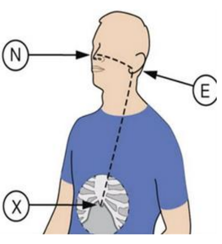
Note: anatomical landmarks remain the same across all age groups
- Lubricate the tip of the tube with sterile water
- Pass the tube using the following steps:
- Insert the tip of the tube into the chosen nostril and advance along the floor of the nose to the nasopharynx
- As the tube passes down into the nasopharynx then the oropharynx, ask child to take sips of water if permitted via a straw to facilitate passage. If the patient is a baby you can offer a dummy to trigger a swallow
- Advance until the pre-noted length (NEX measurement) is at the entrance of the nostril
- Pause procedure if patient is coughing, choking or if there is colour change. Using clinical judgement assess whether procedure should continue or tube should be removed. Escalate to senior health professional if concerned
- Check to ensure tube is not coiled in the patient’s mouth, if it is withdraw until coil not visible. Re-advance tube until the pre-noted length is at the nostril
- Secure the tube at the nostril with hypoallergenic tape
- Apply Hypafix or Hydrocolloid dressing onto cheek under nasogastric tube, then secure with Hypafix or clear film dressing on top, such as Tegaderm
- Confirm position of nasogastric tube by following steps in Procedure for confirmation of position of Nasogastric Tube
- If unable to obtain aspirate, remove guidewire if applicable (following manufacturer’s guidance) and re-attempt to obtain aspirate. Follow steps on Decision tree for nasogastric tube placement checks in children and Infants
- Once position of tube confirmed to be within the stomach and if guidewire still in-situ, remove guidewire following manufacturer’s guidance. Flush the tube with at least 10mls sterile water using enteral syringe. Close connections on tube
NOTE: Remove guidewire when secure and in place, it is not required for x-ray confirmation
- Discard all disposable equipment
- Remove PPE and discard as healthcare waste
- Perform hand hygiene
Do not administer anything down tube until correct position is confirmed
Do not reinsert guide wire when the nasogastric tube is in the patient
Aftercare
Record result in Nasogastric Feeding Tube Care Plan Acute Paediatrics (in PICU use care plan and ‘fluids out’ page within Electronic Clinical Information System)
Appendix 2: Procedure for Confirmation of Position of Nasogastric Tube
Statement
PH testing is used as the first line to test for position and patency of a nasogastric tube.
When no aspirate can be obtained, pH indicator strip has failed to confirm the position of the nasogastric feeding tube (NPSA, 2011) or there are clinical concerns following the placement of a nasogastric tube, the following options should be explored:
- Remove and repass the nasogastric tube
- X-ray can be used as a second line test
Consideration should be taken for the clinical status of patient and previous radiation exposure. Decision should be made promptly to avoid unnecessary fasting and delay to feeding regime.
If x-ray is requested, ensure the reason for x-ray is documented on request form
Requirements
- Appropriate PPE (minimal consideration disposable apron and gloves)
- Clean tray
- Enteral syringe (20/60ml)
- CE marked pH indicator strip (to test human gastric aspirate)
- Nasogastric tube position confirmation record
Timing
- Following initial insertion
- Before administering each feed or medications
- Any new or unexplained respiratory symptoms, if oxygen saturations decrease, or any other clinical concern
- At least 12 hourly during continuous feeds
- Following episodes of vomiting, retching or coughing spasms
- When there is a suggestion of tube displacement
Procedure
- Explain procedure to patient/ carer and obtain consent to proceed
- Perform hand hygiene
- Apply PPE
- Position child/ young person with head and shoulders elevated or if possible in a sitting position
- Clean surface of tray as per decontamination of equipment procedure
- Perform hand hygiene
- Check expiry dates of all equipment and open onto clean surface
Note: when removing pH indicator strip from the packet, hold the white plastic end
Do not let the three coloured squares touch anything as this may alter the result
- Apply disposable gloves
- Check external cm marking at the nostril is the same as documented on care plan
- Attach Enteral syringe to connector on nasogastric tube, pull back gently on plunger to aspirate fluid. Use a 20 ml syringe for infants and small children, and a 60 ml syringe for the older child
Note: only a small amount, 2-3 drops, aspirate is required
- Remove syringe and apply aspirate onto CE marked pH indicator strip covering all three coloured squares
- Follow manufacturer’s guidance, for the colour change process to complete and compare pH indicator strip to colour chart on packaging
- If pH ≤ 5 remove guidewire if still in-situ and flush tube with at least 10mls sterile water using Enteral syringe and proceed to feed, where pH readings fall between 5 and 5.5 it is recommended that a second competent person checks the reading or retests, refer to Decision tree for nasogastric tube placement checks in children and Infants
Note:
If pH >5.5 or no aspirate obtained– Do not use - Refer to Decision tree for nasogastric tube placement checks in children and Infants
- Discard all disposable equipment
- Remove PPE and discard as healthcare waste
- Perform hand hygiene
Aftercare
Record result in Nasogastric Feeding Tube Care Plan Acute Paediatrics
Within PICU record result in the ‘Fluids Out’ page and Care Plan on the Electronic Clinical Information System
Appendix 3: Procedure for Gravity Bolus Feeding via Nasogastric Tube
Statement
Bolus feeding via nasogastric tube delivers a pre-determined volume of feed over a short period of time.
Requirements
- Appropriate PPE (minimal consideration disposable apron and gloves)
- Clean tray
- Enteral syringe (20/60ml)
- CE marked pH indicator strip (to test human gastric aspirate)
- Sterile water
- Breastmilk/ infant formula/ prescribed milk feed
- Nasogastric tube position confirmation record
Note: when removing pH indicator strip from the packet, hold the white plastic end. Do not let the three coloured squares touch anything as this may alter the result
- Check the feed including feed type and expiry date. Opened containers should be kept in the fridge and discarded after 24 hours
- Apply disposable gloves
- Test the position of the tube following the Procedure for confirmation of position of Nasogastric Tube
- If pH ≤ 5 proceed to feed, where pH readings fall between 5 and 5.5 it is recommended that a second competent person checks the reading or retests, refer to Decision tree for nasogastric tube placement checks in children and Infants
- To flush the tube remove the nasogastric tube cap
- Remove the plunger from the 60ml enteral syringe and attach the syringe to the end of the nasogastric tube
- Pour the recommended amount of sterile water into syringe barrel as per individual child’s care plan
- Elevate the syringe slightly above patient’s nose level and let the water run in by gravity
- After the water has been administered, pour the feed into the syringe, continue refilling syringe barrel with feed at a rate tolerated by the child/ young person until feed volume is complete
Note: If the feed is going too fast lower the height of the syringe, if the feed is going too slow raise the height of the syringe. The average time it should take for the feed to run through is 15-30 minutes
- Gravity feeding is the preferred method however there may be times when you need to gently push the feed using the plunger for example thickened feeds
- Once the feed is complete flush the tube with the prescribed volume of sterile water as per individual child’s care plan
- Remove syringe and replace nasogastric tube cap
- Discard all disposable equipment
- Remove PPE and discard as healthcare waste
- Perform hand hygiene
Note: If the child or young person starts coughing or vomiting during the feed, then stop the feed. Once they have settled, retest the position of the tube again following the Procedure for confirmation of position of Nasogastric Tube before recommencing the feed.
Timing
As often as necessary to administer feeds as per individual child’s care plan.
Procedure
- Explain procedure to patient/ carer and obtain consent to proceed
- Perform hand hygiene
- Apply PPE
- Position child/ young person with head and shoulders elevated or if possible in a sitting position
- Clean surface of tray as per decontamination of equipment procedure
- Perform hand hygiene.
- Check expiry dates of all equipment and open onto clean surface
Aftercare
Record result of pH aspirate in Nasogastric tube position confirmation record and document feed in the Fluid Balance Chart.
Within PICU record result in the ‘Fluids Out’ page and Care Plan on the Electronic Clinical Information System
Appendix 4: Procedure for Pump Feeding via Nasogastric Tube
Statement
A feeding pump can be used for bolus, continuous feeds and high risk abdomen feeding (PICU only), delivering a pre-determined volume of feed at a controlled rate. Be aware of strangulation risk with enteral feeding lines.
Requirements
- Appropriate PPE (minimal consideration disposable apron and gloves)
- Clean tray
- Enteral syringe (20/60ml)
- CE marked pH indicator strip (to test human gastric aspirate)
- Sterile water
- Breastmilk/ infant formula/ prescribed milk feed
- Enteral feeding pump (for continuous/ intermittent feed/ high risk abdomen in PICU)
- Feeding administration set
- Nasogastric tube position confirmation record
Timing
- As often as necessary to administer feeds as per individual child’s care plan.
- Feed administration sets should be replaced at least every 24 hours.
- Refer to dietitian for hang times of milk feeds.
Procedure
- Explain procedure to patient/ carer and obtain consent to proceed
- Perform hand hygiene
- Apply PPE
- Position child/ young person with head and shoulders elevated or if possible in a sitting position
- Clean surface of tray as per decontamination of equipment procedure
- Perform hand hygiene
- Check expiry dates of all equipment and open onto a clean surface
Note: when removing pH indicator strip from the packet, hold the white plastic end. Do not let the three coloured squares touch anything
- Apply disposable gloves
- Check the feed including feed type and expiry date. Opened containers should be kept in the fridge and discarded after 24 hours
- Fill the feeding bag if applicable or pierce bottle/ pack with giving set and insert into the pump. Prime the feeding set as instructed by the manufacturer. Nutricia Flocare Infinity II Video and Training Simulator
- For High Risk Abdomen feeding within PICU use Alaris Enteral Feeding Pump Syringe Driver. See PICU guideline for the nutritional management of ‘high risk abdomen
- Set the rate and volume as prescribed by the dietitian/ clinician
- Test the position of the tube following the Procedure for confirmation of position of Nasogastric Tube
- If pH ≤ 5 proceed to feed, where pH readings fall between 5 and 5.5 it is recommended that a second competent person checks the reading or retests, refer to Decision tree for nasogastric tube placement checks in children and Infants
- To flush the tube remove the nasogastric tube cap
- Remove the plunger from the 60ml enteral syringe and attach the syringe to the end of the nasogastric tube
- Pour the recommended amount of sterile water into syringe barrel as per individual child’s care plan
- Elevate the syringe slightly above patient’s nose level and let the water run in by gravity
- After the water has been administered, remove the syringe and attach primed feeding set, open any clamps on feeding set and commence feed
- Once the feed is complete close all clamps and detach the feeding set
- To flush the tube remove the nasogastric tube cap
- Remove the plunger from the 60ml enteral syringe and attach the syringe to the end of the nasogastric tube
- Flush with the prescribed volume of sterile water, as per individual child’s care plan
- Remove syringe and replace nasogastric tube cap
- Discard all disposable equipment
- Remove PPE and discard as healthcare waste
- Perform hand hygiene
Note: If the child or young person starts coughing or vomiting during the feed, then stop the feed. Once they have settled, retest the position of the tube again following the Procedure for confirmation of position of Nasogastric Tube before recommencing the feed.
Aftercare
Record result of pH aspirate in NHSGGC Nasogastric tube position confirmation record and document feed in the Fluid Balance Chart.
Within PICU record result in the ‘Fluids Out’ page and Care Plan on the Electronic Clinical Information System
Appendix 5: Procedure for Removing a Nasogastric Feeding Tube
Statement
A nasogastric tube should be removed at the earliest convenience if it is no longer required, following discussion with clinician.
Requirements
- Appropriate PPE (minimal consideration disposable apron and gloves)
- Medical adhesive remover
- Disposable orange bag
Timing
When there is no further clinical need or tube displacement / misplacement occurs.
Procedure
- Explain procedure to patient/ carer and obtain consent to proceed.
- Perform hand hygiene
- Apply PPE
- Position child/ young person with head and shoulders elevated or if possible in a sitting position.
- Remove any tape using medical adhesive remover to prevent Medical Adhesive Related Skin Injury
- Ensure cap is insitu to prevent flow of tube contents into the oesophagus on removal.
- Withdraw the tube in a single swift motion until completely removed
- Inspect tube to ensure it is all intact
- Offer tissues/clean patients nose
- Discard all disposable equipment
- Remove PPE and discard as healthcare waste
- Perform hand hygiene
- Document removal of tube
Aftercare
Ensure patient comfortable post removal.
Appendix 6: Nasogastric Feeding Tube Care Plan Acute Paediatrics
Nasogastric Feeding Tube Care Plan Acute Paediatrics (pdf)
including:
- Decision Tree for Nasogastric Tube Placement Checks in Children and Infants
- Nasogastric Tube Position Confirmation Record
Appendix 7: Initiating Nasogastric Tube Feeding Out of Hours
Appendix 8: Nasal Tube Retaining Device (NTRD) Care Plan
Appendix 9: Medicine considerations for administration via nasogastric tube
|
Enteral tube size Viscous or granule preparations may block fine bore tubes |
|||
|
Class |
Medicine |
Recommendations |
Additional information |
|
Antibacterial agents |
Ciprofloxacin (suspension formulation) |
Crush and disperse tablets (250mg, 500mg, 750mg) in water |
High viscosity, granular suspension may block enteral tubing |
|
Clarithromycin (suspension formulation) |
Dilute with equal volume of water |
High viscosity suspension may block enteral tubing |
|
|
Metronidazole (suspension formulation) |
Dilute with equal volume of water |
Rosemont do not recommend diluting their suspension with water, as this may destabilise the suspension. |
|
|
Gastro agents |
Enteric coated PPIs (omeprazole, lansoprazole, esomeprazole) |
See separate NHS GGC (RHC) guidance ‘Proton Pump Inhibitor guideline for neonates and paediatrics’ |
- |
|
Mesalazine (granule formulations) |
Discuss with specialist team/ pharmacist |
-
|
|
|
Immuno-modulatory agents |
Hydrocortisone (Alkindi granules) |
Discuss with specialist team/ pharmacist
Switch to oral solution licensed for nasogastric administration |
Manufacturers advise granules may block enteral tubing |
Medicines refer to all formulations, unless specified. Table 1, 2 and 3 are not exhaustive, contact pharmacy if unsure
|
Enteral tube material Medicines may adsorb onto enteral tubes made of PVC, silicone, latex or PUR, reducing their bioavailability |
|||
|
Class |
Medicine |
Recommendations |
Additional information |
|
Neurology agents |
Carbamazepine (suspension formulation) |
Dilute with an equal volume of water prior to administration |
Discuss with specialist team/ pharmacist if concerned about seizure control |
|
Diazepam |
Dilute with an equal volume of water prior to administration |
- |
|
|
Phenytoin |
Discuss with specialist team/ pharmacist
|
- |
|
|
Immuno-modulatory agents |
Ciclosporin (solution formulation) |
Discuss with specialist team/ pharmacist
|
- |
|
Tacrolimus |
Discuss with specialist team/ pharmacist |
Certain brands are licensed for nasogastric administration
|
|
Medicines refer to all formulations, unless specified. Table 1, 2 and 3 are not exhaustive, contact pharmacy if unsure
|
Interaction with feeds Care should be taken to ensure enteral feed does not cause blockages or reduce absorption of medicines |
|||
|
Class |
Medicine |
Recommendations |
Additional information |
|
Antibiotic agents
|
Ciprofloxacin
|
2 hours before and 2 hour after each dose |
Binds to certain minerals in enteral feeds (i.e. calcium, magnesium, aluminium) reducing absorption |
|
Flucloxacillin
|
1 hours before and 1 hour after each dose |
Consider alternative antibiotic or using higher end of dosing range if prolonged breaks in feed not possible |
|
|
Metronidazole (suspension formulation) |
1 hour before feeds |
Enteral feeds may reduce absorption |
|
|
Phenoxymethylpenicillin
|
2 hours before and 1 hour after each dose |
Enteral feeds may reduce absorption |
|
|
Rifampicin
|
30 minutes before and 2 hour after each dose |
Enteral feeds may reduce absorption |
|
|
Antifungal agents
|
Itraconazole (suspension formulation) |
2 hours before and 1 hour after each dose
Discuss with specialist team/ pharmacist |
Enteral feeds may reduce absorption |
|
Posaconazole (suspension formulation)
|
Give immediately after feed or during a feed infusion
Discuss with specialist team/ pharmacist |
High-fat feeds may increase absorption N.B. posaconazole formulations do not act similarly, and are not interchangeable. |
|
|
Cardiac agents
|
Digoxin |
2 hours before and 1 hour after each dose
|
High-fibre feeds may reduce absorption – contact dietitian if unsure of enteral feed contents. |
|
Warfarin |
1 hours before and 1 hour after each dose |
Vitamin K containing feeds may reduce anticoagulation effect – contact dietitian if unsure of enteral feed contents. Consider monitoring INR closely |
|
|
Immuno-modulatory agents |
Tacrolimus |
1 hour before and 2 hours after each dose
Discuss with specialist team/ pharmacist |
Enteral feeds may reduce absorption |
|
Neurology agents |
Phenytoin (suspension formulation)
|
2 hours before and 2 hour after each dose
Discuss with specialist team/ pharmacist |
Binds to protein in enteral feeds, absorption unpredictable N.B. phenytoin formulations do not act similarly, and are not interchangeable.
|
|
Gastro agents |
Sucralfate |
1 hours before and 1 hour after each dose |
Risk of blockage (bezoar formation with enteral feeds) Consider alternative therapy |
Medicines refer to all formulations, unless specified. Table 1, 2 and 3 are not exhaustive, contact pharmacy if unsure
References:
[1] Smyth, J (ed.) The NEWT Guidelines Wrexham Maelor Hospital
[2] White, R; Bradnam, V (eds.) Handbook of Drug Administration via Enteral Feeding Tubes Pharmaceutical Press (Oxon.) 2015
[3] Royal College of Paediatrics and Child Health, Neonatal and Paediatric Pharmacists Group. The use of unlicensed medicines or licensed medicines for unlicensed applications in paediatric practice. Updated 2013.
[4] MGP Ltd. Medication management of patients with nasogastric (NG), percutaneous endoscopic gastrostomy (PEG), or other enteral feeding tubes. January 2019.
[5] Specialist Pharmacy Service (2025) How enteral feeding tubes affect medicines. NHS SPS. Available at: https://www.sps.nhs.uk/articles/how-enteral-feeding-tubes-affect-medicines/
Editorial Information
Last reviewed: 05/05/2026
Next review date: 31/05/2029
Author(s): Kirsty Fay (Acute Clinical Nurse Educator with FFN interest), Michelle Brooks (Complex Nutrition Nurse Specialist), Lyndsay Burns (Acute Clinical Nurse Educator) , Amanda Law (Senior Acute Clinical Nurse Educator).
Version: 2
Approved By: Paediatric Guidelines Group
Document Id: 1189
References
Best, C., 2019. Selection and management of commonly used enteral feeding tubes. Nursing Times [online]; 115: 3, 43-47. Available at: < https://www.nursingtimes.net/nutrition-and-hydration/selection-and-management-of-commonly-used-enteral-feeding-tubes-18-02-2019/ >
Dawson, J.A., Summan, R., Badawi, N. and Foster, J.P., 2021. Push versus gravity for intermittent bolus gavage tube feeding of preterm and low birth weight infants. Cochrane Library. [online]; issue 8. Available at: < https://www.cochrane.org/CD005249/NEONATAL_push-versus-gravity-intermittent-bolus-gavage-tube-feeding-preterm-and-low-birth-weight-infants >
GBUK Global, 2025. Feeding Tubes. [online] Available at: < https://www.gbukglobal.com/enteral-feeding/enteral-feeding-products/feeding-tubes/ >
Healthcare Improvement Scotland (HIS), 2015. Complex Nutritional Care Standards. [online] Available at: < https://www.healthcareimprovementscotland.scot/ >
Knox, T. and Davie, J., 2009. Nasogastric tube feeding – which syringe size produces lower pressure and is safest to use? Nursing Times [online]; 105: 27. Available at: < https://www.nursingtimes.net/gastroenterology/nasogastric-tube-feeding-which-syringe-size-produces-lower-pressure-and-is-safest-to-use-09-07-2009/ >
National Patient Safety Agency (NPSA), 2011a. Decision tree for nasogastric tube placement checks in children and infants (not neonates). [online] Available at: < https://www.npsa.nhs.uk/alerts >
National Patient Safety Agency (NPSA), 2011b. Patient Safety Alert: Reducing harm caused by misplaced nasogastric feeding tubes in adults, children and infants. [online] Available at: < https://www.cas.mhra.gov.uk >
NHS Improvement, 2016. Patient Safety Alert: Nasogastric tube misplacement: continuing risk of death and severe harm [online] Available at: https://www.england.nhs.uk/wp-content/uploads/2019/12/Patient_Safety_Alert_Stage_2_-_NG_tube_resource_set.pdf
NHS Scotland, 2009. Code of Conduct for Healthcare Support Workers [online] Availabe at: < code-of-conduct.pdf >
Nursing and Midwifery Council (NMC), 2018. Standards of proficiency for registered nurses. [online] Available at: < www.nmc.org.uk/globalassets/sitedocuments/standards/2024/printer-friendly/standards-of-proficiency-for-nurses-print_friendly.pdf >
Starship, 2023. Nasogastric & nasojejunal tube care for an infant, child, or young person. [online] Available at: < https://starship.org.nz/guidelines/nasogastric-and-nasojejunal-tube-care-for-an-infant-child-or-young-person >
West of Scotland Paediatric Gastroenterology, Hepatology and Nutrition, 2012. Enteral Tube Feeding Information Pack for Healthcare Professionals. [online] Available at: < https://www.wospghan.scot.nhs.uk/ >
NHS Scotland, 2025. Childsmile Toothbrushing Standards [online] Available at: <Toothbrushing Standards – Childsmile>
Nutricia, 2024. [online] Available at: <Nutrini Peptisorb>
The Rotherham NHS Foundation Trust, 2021. Oral health advice for tube-fed children and adults [online] Available at: < Oral health advice for tube-fed children and adults | The Rotherham NHS Foundation Trust>
Sheffield Children’s NHS Foundation Trust, 2025. Oral health information for children with enteral tube feeding [online] Available at: <Oral health information for children with enteral tube feeding - Resource Library - Sheffield Children's NHS Foundation Trust>
Silva, P.U.J. et al, 2021. Combination of toothbrushing and chlorhexidine compared with exclusive use of chlorhexidine to reduce the risk of ventilator-associated pneumonia: A systematic review with meta-analysis. ScienceDirect [online]; Volume 76. Available at: <Combination of toothbrushing and chlorhexidine compared with exclusive use of chlorhexidine to reduce the risk of ventilator-associated pneumonia: A systematic review with meta-analysis - ScienceDirect>
NHS Improvement, 2016. Resource set Initial placement checks for nasogastric and orogastric tubes. [online] Available at:<Resource_set_-_Initial_placement_checks_for_NG_tubes_1.pdf>
The Association of UK Dietitians, 2019. Guidelines for the preparation and handling of expressed and donor breast milk and specialist feeds for infants and children in neonatal and paediatric health care settings [online] Available at: < BDA-guideline-for-storage-and-handling-of-EBM-and-DBM.pdf>